
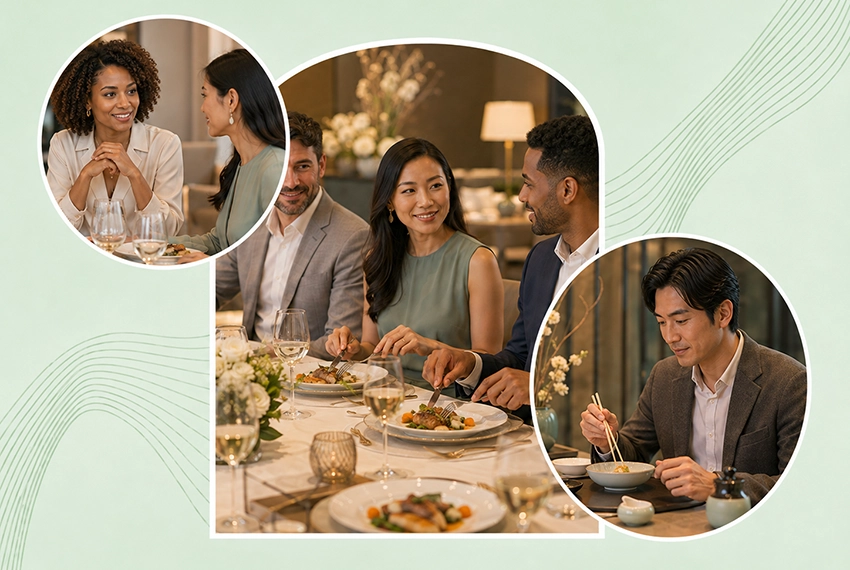
International Dining Etiquette: Essential Table Manners Around the World
Dining in another country can be one of the most enjoyable ways to experience a new culture. However, table manners are not the same everywhere. A gesture that is perfectly normal in one country may be considered inappropriate in another. Understanding international dining etiquette can help travellers and guests feel more comfortable while showing respect for local customs.
You do not need to memorise every rule before travelling. A little awareness and willingness to observe the people around you can go a long way.
Learn Before You Arrive
Before dining in a new country, take a few minutes to understand the local customs. This may include how food is served, which hand is used for eating, whether tipping is expected, and how meals traditionally begin and end.
Being aware of these details helps avoid uncomfortable situations and shows appreciation for the culture hosting you.
Chopsticks and Asian Dining Customs
In several Asian countries, chopsticks are an important part of the dining experience. However, the rules surrounding them can vary.
For example, placing chopsticks upright in a bowl of rice may have cultural associations in certain countries and should be avoided. It is also considered good practice not to point at people with chopsticks or use them to move shared dishes unnecessarily.
When unsure, observe how others use their chopsticks and follow the lead of your host.
Respect Local Table Customs
Dining etiquette around the world can differ significantly in terms of seating, serving, and conversation. In some cultures, waiting for the host to begin eating is considered polite. In others, sharing food from common dishes is a regular part of the meal.
The way bread is eaten, food is passed, and drinks are served may also vary. Rather than assuming that familiar table manners apply everywhere, remain open to learning new customs.
Understand the Role of Your Hands
In some parts of the world, eating with your hands is an accepted and traditional practice. When this is the case, it is important to understand which hand is traditionally used for eating and serving food.
Follow the guidance of your host and observe how others approach the meal. Trying to respect local practices can make the experience feel more natural and enjoyable.
Tipping Is Not Universal
Tipping practices vary widely between countries. In some places, a service charge may already be included in the bill, while in others, tipping is expected.
Researching local customs beforehand can prevent confusion. If you are unsure, discreetly ask your host or a member of staff rather than making assumptions.
Be Respectful and Adaptable
The most important rule of international dining is respect. Avoid criticising unfamiliar food, customs, or ways of eating. What may feel unusual to you could be an important cultural tradition.
Observe, ask polite questions when appropriate, and be willing to adapt.
Final Thoughts
Good international dining etiquette is not about knowing every table rule in the world. It is about being respectful, curious, and adaptable when experiencing different cultures.
By understanding the basics of dining etiquette around the world, you can approach international meals with greater confidence while making meaningful connections through one of the most universal experiences—sharing food.


