
Search
Close this search box
Course
Travel Etiquette
A
Dining Etiquette: The Art of the Table
services
Dining Etiquette: The Art of the Table

Crafting new bright brand unique visual systems digital experience focused on wide range of original collabs.

Master the Art of Travel Etiquette
Travel is more than reaching a destination—it is an experience shaped by how you present yourself, interact with others, and respect the places you visit. Our Travel Etiquette Programme is designed to help you travel with confidence, courtesy, and cultural awareness. From airport and check-in etiquette to luggage, dining, communication, hotel stays, public behaviour, and social media, this programme prepares you to navigate every journey with grace and ease.
Course Description
This programme explores the essential etiquette that helps individuals navigate travel experiences with confidence, courtesy, and awareness. Learn the art of appropriate dressing, airport and check-in behaviour, luggage handling, dining, communication, hotel stays, and respecting local cultures. The programme helps you travel comfortably, respectfully, and gracefully while making a positive impression wherever you go.
Prepare thoughtfully by understanding your destination, travel requirements, local customs, and planned activities. Organise your documents, bookings, and essentials in advance to avoid last-minute stress. Good preparation allows you to travel smoothly while being considerate of those travelling with you.
Choose attire that is comfortable, appropriate for the destination, and respectful of local customs and surroundings. Maintain good personal grooming and present yourself neatly throughout your journey. Dressing thoughtfully helps you feel confident while showing consideration for others.
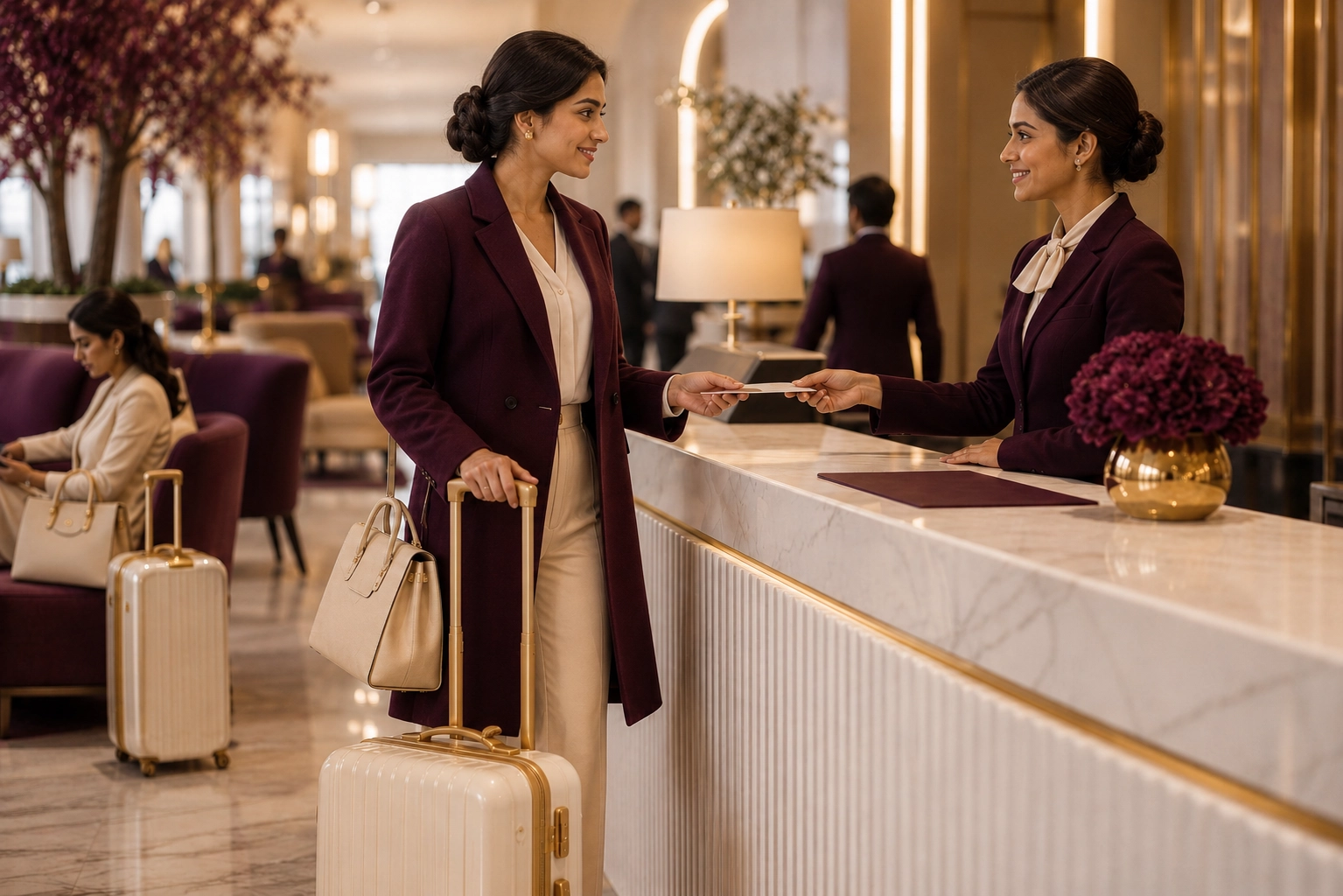
Arrive on time, keep your travel documents ready, and follow airport procedures with patience and courtesy. Respect queues, staff, and fellow travellers while keeping your belongings organised. At check-in, communicate clearly and avoid unnecessary delays for others.
Keep your luggage organised, secure, and within the permitted size and weight limits. Avoid blocking walkways, seats, or shared spaces with your bags, and handle others’ belongings with care. Label your luggage properly and collect it promptly when arriving at your destination.
Communicate politely and respectfully with fellow travellers, staff, and locals throughout your journey. Be mindful of your tone, volume, and choice of words, especially when navigating cultural or language differences. Listen attentively, ask courteously, and remain patient in unfamiliar situations.
Be mindful of your surroundings and behave respectfully in airports, transport, attractions, and public spaces. Follow local rules, respect personal space, and avoid behaviour that may disturb others. A courteous attitude helps create a pleasant experience for both you and those around you.
Follow the dining customs and table manners of the destination while remaining respectful of local traditions. Be considerate of restaurant staff and fellow diners by keeping your voice and behaviour appropriate. Try local cuisine with an open mind and avoid wasting food whenever possible.
Treat the hotel and guest room with care, keeping the space clean, organised, and respectful of shared facilities. Be considerate of hotel staff and other guests by following property rules and maintaining appropriate behaviour. Respect the room, amenities, and belongings throughout your stay.
Be mindful when taking photographs or recording videos, especially in culturally sensitive or private places. Ask for permission before photographing people and respect restrictions at religious sites, attractions, and events. Share travel content responsibly and avoid posting images or information that may compromise someone’s privacy.
Complete your check-out on time and ensure the room is left clean and in good condition. Return keys, cards, or borrowed items and settle any outstanding charges courteously. Leave the property respectfully and thank the staff for their service.
Course Outcome
By the end of the Dining Etiquette Programe, you will have transformed your approach to dining, equipped with the skills to confidently navigate any meal, from the most casual brunch to the most elaborate banquet. Join us and take the first step towards mastering the art of dining with style and sophistication.
Who Should Enroll?
This programme is ideal for:

Professionals
Individuals preparing for corporate events, networking dinners, or
business meetings where you would like to project confidence and professionalism.
Socialites
Individuals who frequently attend social gatherings and wish to enhance their dining etiquette for a more polished experience.
Students
Young adults who are preparing themselves for greater academic or professional challenges where fine dining manners will be essential.
Anyone Interested in Fine Dining
People who want to elevate their dining experience and learn the nuances of etiquette to impress guests or hosts.
FAQs
Basic etiquette that should be followed at the table are of respect, courtesy, and awareness about people at the table. This can be started with the act of waiting for everybody to be seated and waiting for the host to let one know when to start eating. Use cutlery according to the table setting etiquette. Sit up straight, do not lean with your elbows against the table, and do not cross over to reach the food, politely ask if things may be passed across. Chew with your mouth closed, eat small bites, and never speak while you are eating. These simple dinner manners exhibit courtesy and enrich the dinner experience for all.
Handling cutlery is a major part of dining etiquette. In formal dining etiquette, the rule of thumb is to work from the outside in with cutlery. Usually, the fork is placed on the left side, while the knife and spoon are on the right side. For cutting, you use the fork in your left hand and the knife in your right hand. To signal you are done with your meal, place the cutlery on the plate in the following positions, cross the fork and knife diagonally or in an inverted "V". When you are all done, place them parallel to each other on the plate. Proper use of cutlery is one of the primary aspects of table manners, it shows your considerations for the people you are dining with.
Many individuals commit some general oversights that can undermine dining table etiquette. Never chew and talk simultaneously, nor use other cacophonous sounds like slurping, never text or play at the table, graciously concentrate on your dining partners. Be careful not to lean forward across others, just ask to have items passed to you instead. Avoid resting elbows on the table, and refrain from seasoning food before tasting it, as this can be seen as disrespectful to the host or chef. Fine dining etiquette makes every experience enjoyable.
Formal dining etiquette is more formalized. Each element in the place setting has to be identified, a napkin is positioned to the left and above the knife, a dinner plate to the immediate left, glasses to the right, and utensils. Wait for a signal from the host to commence eating and eat at the same tempo as the rest of the group. Follow the table etiquette rule of using the outermost utensil for each new course. In formal dining, you should have poise and grace, maintain eye contact, and contribute to soft conversation without raising your voice. Formal dining etiquette is about showing respect to the host and to the event.
Dining etiquette classes are useful for any person who would want to feel sure and not nervous in such formal setups. The key lessons one gets in dining etiquette classes include how to handle utensils and cutlery, how the placement of a napkin should be, the managing of multiple courses, and knowing when to start or pause during meals. Classes are also conducted on basic dining etiquette and advanced table etiquette in formal occasions that help an individual master social graces and dining manners etiquette. Knowledge of the etiquette of dining can uplift personal and professional interactions to leave an impression in any dining situation.
Monday - Saturday : 09:30 am - 07:30 pm

Helping individuals cultivate graceful manners, confident communication, and a polished personal presence.
