
Search
Close this search box
Course
Children Etiquette (5-12-years)
A
Etiquette for Children and Youth: Polished Young Personalities
services
Etiquette for Children and Youth: Polished Young Personalities

Crafting new bright brand unique visual systems digital experience focused on wide range of original collabs.

Empowering Young Minds with the Correct Etiquettes
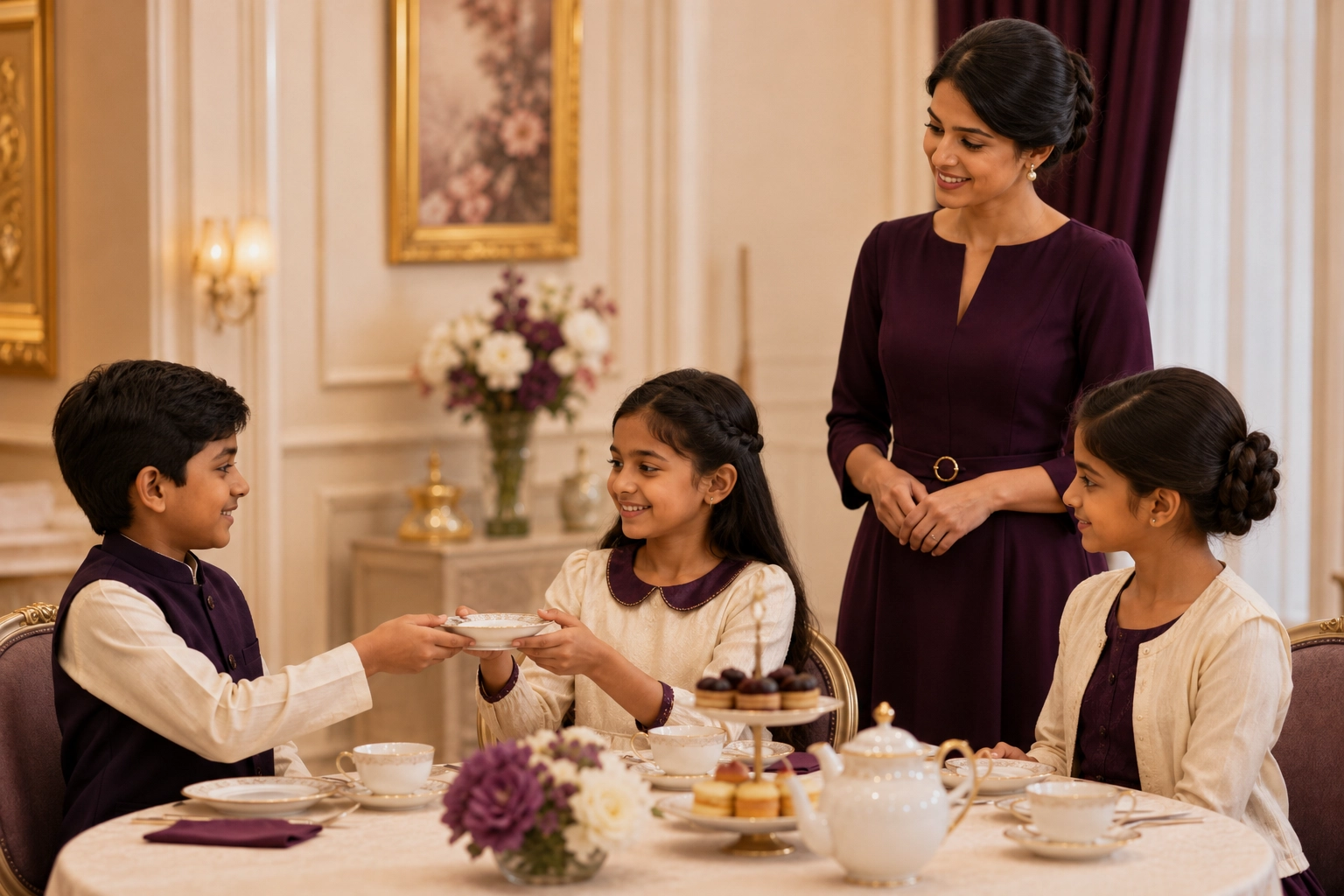
We teach children how to practice good manners, speak politely, and interact confidently in everyday situations. Our Etiquette for Children course includes hands-on lessons in table manners, respectful communication, personal grooming, and proper behavior in public. We use fun, engaging methods to help kids understand and apply etiquette in real life.
Under the expert guidance of Alisha Sachdev, children build strong social skills, boost their confidence, and develop habits that shape their character for life.
Binox Offerings
- We believe that the human essential to start any successful project and that this where splendid emotion between the re-generated company.
- We believe that the human essential to start any successful project and that this where splendid emotion between the re-generated company.
- We believe that the human essential to start any successful project and that this where splendid emotion between the re-generated company.
What's included binox service?
- Multi-state payroll processing
- National benefit products
- HR reporting
Course Description
This course teaches young learners essential manners, communication skills, and social behavior. From polite greetings to table manners, children gain confidence and respect for others, helping them navigate social and academic settings with grace and self-assurance.
This module introduces children to the basics of respectful communication. They will learn the difference between verbal and non-verbal communication and how body language, facial expressions, and tone of voice influence the way their words are received. Through simple exercises and real-life examples, children begin to develop empathy and confidence in expressing themselves clearly.
Children learn that their body talks even when they don’t speak. This session focuses on teaching them how facial expressions, eye contact, posture, and gestures can send messages. By becoming aware of their body language, children develop better control over their emotions and actions.
This interactive session equips children with the social skills to start and maintain polite conversations. They’ll learn when to speak, how to listen actively, how to ask and answer questions tactfully, and which topics to avoid. “Magic words” like please, thank you, and excuse me are emphasized throughout.
Young learners will explore the joy of speaking clearly and confidently. This module covers the basics of pronunciation, enunciation, voice control, and speech rhythm. Through fun exercises, they’ll also learn how to relax their body and voice to improve clarity.
This beginner-friendly session helps children build the courage to speak in front of an audience. It focuses on preparation, posture, and presentation—guiding them through how to organize their thoughts and deliver them with poise and a smile.
In today’s digital world, children also need to know how to use the phone politely. This session teaches how to make and receive calls, speak respectfully on mobile phones, and send kind, well-written text messages. Children also learn when it’s okay to use technology—and when it’s better to put it away.
This module introduces the basics of writing notes and emails. From thank-you letters to friendly messages, children will learn how to write with politeness, warmth, and proper formatting, developing their written communication skills in a simple and engaging way.
This module teaches children essential dining etiquette for various settings. They’ll learn to set the table, take their seats politely, and maintain good posture. Lessons cover proper use of napkins, cutlery, and polite behaviour during meals, including how to eat bread, soup, and dessert gracefully. Children will explore global dining styles, use of finger bowls, and how to refuse food courteously. They’ll also learn the differences between sit-down and buffet etiquette, and how to behave respectfully in fast-food restaurants.
This module equips participants with the skills to create a confident and respectful initial impact. Learners will explore the importance of positive body language, appropriate greetings, and proper handshakes. They’ll practice introducing themselves and others with clarity, using names and titles correctly, and remembering names to build rapport. Special emphasis is placed on introducing adults with courtesy and confidence, laying the foundation for strong and respectful social interactions.
This topic nurtures empathy, self-respect, and respect for others. Participants will learn the value of kindness, tact, and inclusion, including how to interact thoughtfully with people of different abilities. The session explores character-building, self-esteem, peer pressure, and bullying, while also helping learners set and achieve personal goals. Through cultural awareness, students will gain appreciation for differences in skin color, body and face shapes, dress, food, music, and global manners—encouraging openness and respect in a diverse world.
The Image Grooming & Personal Hygiene module teaches the importance of maintaining a clean, well-groomed appearance as part of a confident personal image. Participants will learn essential hygiene practices, including care for hair, body, teeth, and fingernails. The session also covers understanding basic dress codes, along with practical tips for caring for clothing and shoes to ensure a neat, polished, and respectful presentation in any setting.
In this session, children will learn the essential courtesies that help them move through public spaces with confidence and respect. They will understand the polite way to hold and walk through doors, offer or take seats appropriately, and show consideration to others in shared environments. Proper behaviour on stairs, elevators, and escalators will be introduced.
In this engaging module, children will learn the essentials of party and event etiquette, both as hosts and as guests. They’ll explore the responsibilities of a gracious host, including creating a thoughtful guest list, sending appropriate invitations, and planning the event with care. As guests, children will be taught how to accept or decline invitations politely and respond in a timely manner. At the event, they’ll practice answering the door with warmth, making proper introductions, navigating receiving lines, and understanding the gracious exchange of gifts and compliments. Finally, the session will cover polite farewells and the importance of expressing gratitude through verbal thanks and handwritten thank-you notes.
This module focuses on helping children develop graceful body language and confident presence through proper posture and poise. They will learn how to align their upper and lower body correctly, with attention to the positioning of the neck, chin, chest, shoulders, abdomen, hands, pelvis, legs, and feet. Through guided activities, children will practice refined movements of the fingers, arms, and feet to build controlled and elegant motion. They will also explore gender-appropriate techniques for walking, sitting with poise, standing with confidence, and entering or exiting a car with ease.
Course Outcome
Participants upon completion of the Children & Youth Etiquette Programme will be well-prepared with the full range of skills needed to sustain them through life’s numerous challenges. They will leave as confident and polished individuals well-equipped to face social and professional challenges with grace and competence. This program will not only equip them with practical skills but also instill a sense of respect, responsibility, and confidence that will serve them well in every aspect of their lives.
Who Should Attend?

Children (6-12)
Young learners who are just now discovering the world of social
interactions and need foundational etiquette skills.
Pre-Teens (10-13)
Students starting the early stages of pre-adolescence and would benefit from a heightened sense of social awareness and communication skills.
Teenagers (Ages 14-17)
Young people preparing for social, educational, and professional environments that demand deep interpersonal skills.
Parents
Parents seeking an etiquette program that enables their child to grow with confidence, respect, and personal development in various social settings
FAQs
Etiquette teaches kids and youth how to develop social skills, which imparts them with confidence and respect for other people. Even at the childhood stage, learning manners allows for an appropriate environment for socialization in school, at home, or in social events. It instructs the child on how to present themselves favorably and appropriately in all situations. Etiquette for the little ones now begins with 'please' and 'thank you.' These couple of words help instill fundamental habits of thankfulness and gratefulness. You reach more advanced levels of youth etiquette as they grow older, entering into complex social behavior participation which may include situations at work or discussing respectfully while managing formal events.
Parents must also educate children on etiquette, such as good table manners while eating. Practice simple habits of washing hands before eating, sitting up, and using utensils in the right places with the children. For little kids, colorful plates and child-friendly cutlery could be useful during these practices. Explain the ways that children can be made to engage in polite conversation around the table, encourage not to use their cell phones or watch TV, and witness parents engaged in polite behavior such as chewing with the mouth closed, saying "excuse me" when leaving the table, and waiting for everyone to be served before eating. For instance, role-playing games as if going to a restaurant, can be very amusing. For instance, parents might ask their children to serve them a pretend meal, allowing them to practice pouring water without spilling or asking politely for the salt. In due course, the child gets accustomed to these habits and gets himself prepared for dinner with his family or friends.
Digital etiquette or netiquette has been defined as the responsible and proper conduct while using the Internet. For youth, this is especially important as they navigate social media, messaging platforms, and online learning environments. The core elements include preventing cyberbullying, avoiding violations of others' privacy, and proper use of language. Educate the youth that everything they put or share online has the potential to have a lasting impact. What a lot of people tend to forget is that even when posts are deleted, they can still be captured as screenshots and shared. Let them pause and think before posting. The other important aspect would be the respect of people's time and attention. One should not spam, avoid unwarranted late-night chattering, or be wordy in emails or texts. Such lifestyles balance online and offline practices for youth, making their digital habits healthier and less dependent on technology to communicate.
Etiquette training is encouraged not only in school daily activities but also as part of the school curriculum. Therefore, there is a show of respect through raising hands before talking, and then listening attentively to others waiting for one's turn to talk. Such practices encourage respect amongst people and orderly behavior. Schools can also organize special lectures on social etiquette for students, like greeting people, eye contact, or showing gratitude. Role-playing makes the student realize how one should greet a teacher or classmate they are meeting for the first time or after class or even during recess. Debates or student councils, for example, offer opportunities to learn formal speech and leadership etiquette. Dining etiquette can be taught in schools through formal lunches or by teaching students how to go through various cultural customs and expand their global awareness.
Public etiquette helps the young people share places in a respectful and responsible way. Some of the basic rules include keeping noise to a level, not littering, and respecting others personal space. Whatever the setting is, be it a park, shopping mall, or public transport, learning about respect for communal settings ensures harmonious interaction among the youth. For example, when they are using public transport, they should give up their seats to the elders or handicapped persons and avoid occupying the corridors. When in public gatherings like concerts or sporting events, they should respect others’ enjoyment by avoiding disruptive behavior like pushing or shouting. These teachings can be reinforced through the very basic action of underlining examples in everyday life. Most importantly, if youth are encouraged to emulate adults through respectful behavior, most youths will do so. Persistent teaching of public manners leads to much more pleasant and respectful communities.
Monday - Saturday : 09:30 am - 07:30 pm

Helping individuals cultivate graceful manners, confident communication, and a polished personal presence.
